

“When the world zigs, zag.”
“Disrupt.”
“Find the whitespace.”
Marketing loves to find a mantra, pop it in a keynote, paint it on a wall and then completely ignore it. For all the talk of difference, modern advertising has quietly rallied around one core belief: everyone, everywhere, must be having an absolutely brilliant time.
The formula is universal: You + Product = Happiness.
Drink/wear/eat/drive/apply for joy. Fashion? Young people having fun. Booze? Young people having fun. Feminine hygiene? Still, improbably, young people having fun. Life insurance? Against all narrative logic young people having fun.
If aliens studied our ads, they’d assume humanity exists in a permanent state of mild euphoria. So, how is a brand supposed to stand out if we’re all relentlessly happy?
What if the real zig…. is gloom? In a world of marketing Spongebobs, are you better off being a bit Squidward?
The Hamlet cigar campaign nailed something most modern advertising wouldn’t dare to touch: failure. Glorious failure. The premise was simple: life is awful, have a smoke. Audiences loved it. In fact, ironically it made them happy, because the inconvenient truth is: watching happiness doesn’t necessarily make us happy. It often does the opposite.
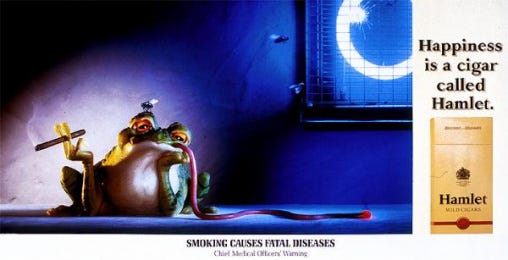
Sell happiness, and people resist. Sell misery, and people lean in.
Skittles’ untouchable ‘Touch’ turned the product into a nightmare, Bachelors Super Noodles admitted they weren’t even that super. Metz’s Judderman was a waking nightmare and Fernet-Branca’s beautifully bleak “Life is bitter” campaign delivered a brutal bit of honesty: things aren’t that great, have a drink. It stands out because the truth, even a slightly depressing one, feels good.
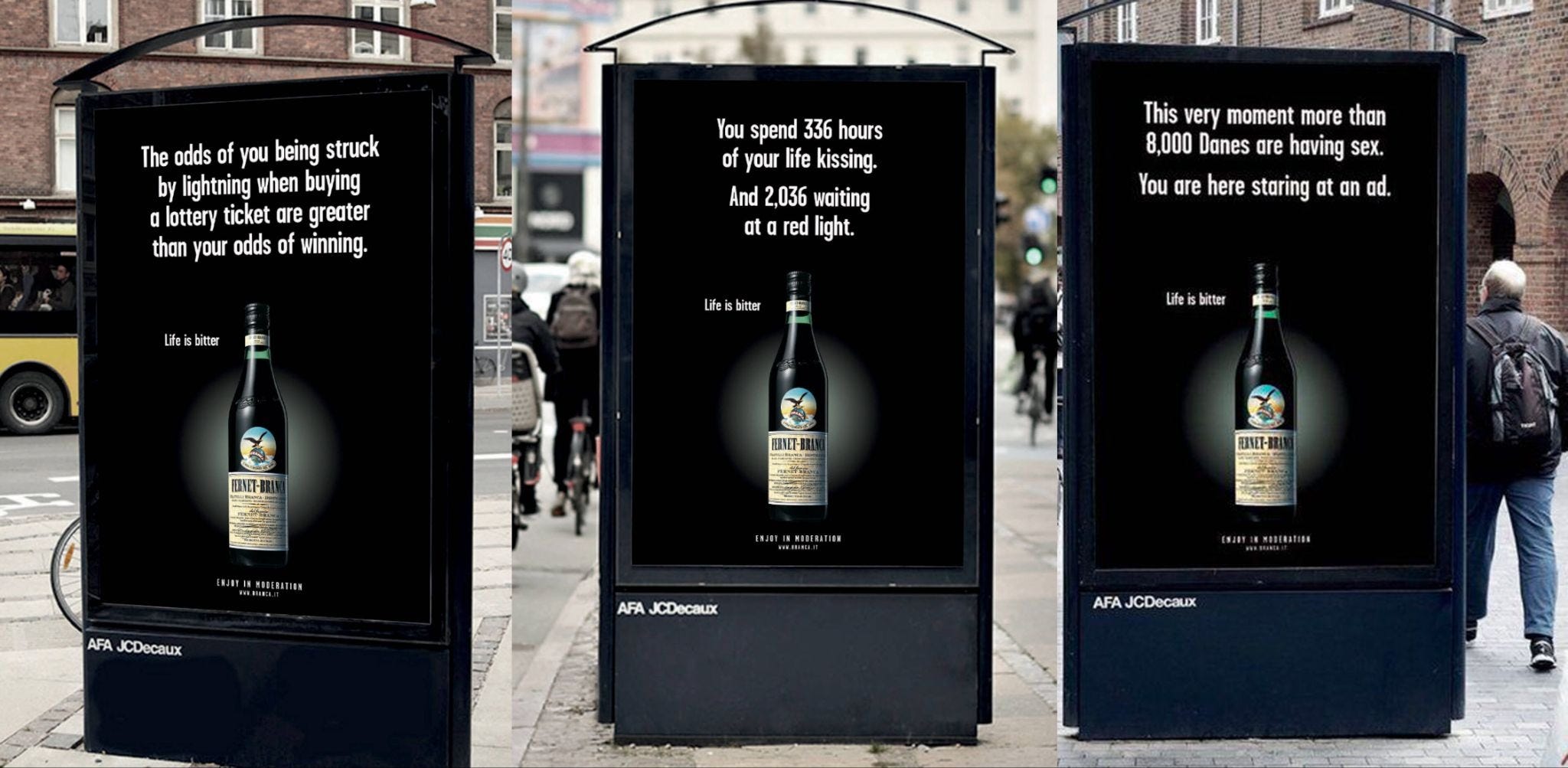
There’s a reason stand-up comedy thrives on self-deprecation and existential dread. Imagine a comedian bounding on stage to tell you how wonderful everything is. You wouldn’t laugh, you’d worry about them. Advertising, meanwhile, insists on doing exactly that.
If every brand is selling happiness, happiness stops being distinctive. It becomes wallpaper. So perhaps the opportunity isn’t another shinier smile. Perhaps it’s a touch of melancholy. A note of beautifully crafted pessimism. Something that feels recognisable rather than aspirational. In a world of brands pretending everything is perfect, the one that admits it isn’t is the one we might actually believe. When every brand is busy selling a better life, the one that reflects a messy, disappointing and occasionally funny version does something far more powerful than stand out. It resonates.